In 2022 Vape Superstore moved to Shopify Online Store 2.0 and replaced the tools behind search and merchandising in the same project. E-commerce Studio (ECS®) did that integration. We were then trading as Karmoon, the systems integrator named in Algolia's account.
Quotations are from that story and the case study PDF. A September 2023 post on the UK eCommerce Awards site records the same Search and Recommend work. Where this article describes the storefront as it stands, that is from vapesuperstore.co.uk in November 2026.
The challenge
Algolia records more than 7,500 SKUs, from over 150 brands, including over 2,500 e-liquids. Many of those products sit close together. Flavour, strength, size and brand are what separate them, so a customer with a name already in mind still has to hit the right one.
The search tool before Algolia was Boost Search & Filter. Dan Judd, Head of Digital, described it in the case study. "Our previous search provider (Boost & Search Filter) served its purpose, but it was quite cumbersome, quite slow, and not as accurate as Algolia in terms of search relevance."
Merchandising and recommendations sat in Nosto. The catalogue was being described by two products at once.
Paid advertising is not available in the category. Organic search, and the path from the landing page to the basket, have to do the commercial work. Ed Swain, director of Easytek Ltd. and managing director of Vape Superstore, told Algolia that the vast majority of traffic comes from search, so load speed and the measures Google watches are part of the case. The awards post describes the same limit from the store's side, with the emphasis on organic traffic, referrals and email. Judd put the practical aim in one line. "Algolia allows us to focus on and refine search speed and relevance a lot more."
What we did
The Online Store 2.0 migration and the Algolia deployment were one project. Algolia writes that Search went in with support from Algolia and from the integration partner, and that the benefit was visible "straight away".
The case study gives the timing. Deployment finished in less than two weeks, and refinement ran for another three to four weeks. That is the schedule Algolia published for this project.
Algolia Search replaced Boost Search & Filter. Recommend, Personalization and AI Reranking replaced Nosto for merchandising and recommendations. Algolia says the change was a more tailored experience and faster load speeds, which the story treats as essential where paid ads cannot run.
Placement is set out in the case study. Algolia ran on the home page, in the search bar, on trending items, and on category pages for sorting and filtering. Recommend suggested products to add to the cart during checkout. Personalization was there because the range is wide. "For example, we have over 2,500 e-liquids, so being able to personalize the results for customers is a huge bonus," Judd said. "There are so many different flavors, and we're able to meet a specific customer's tastes."
The same index did the merchandising. "From a marketing side, we work very closely with the brands that we sell, and they regularly put on promotions for their products, and with Algolia we can boost their product ranges to get the best return on investment." Algolia adds that the team could spot products that were not selling and sort them so those lines were given a lift. After the launch, the store leaned heavily on its Algolia customer success manager to tune Personalization. Swain described the relationship directly. "We see it as a partnership, as opposed to a software purchase."
The screenshots below are from vapesuperstore.co.uk in November 2026.
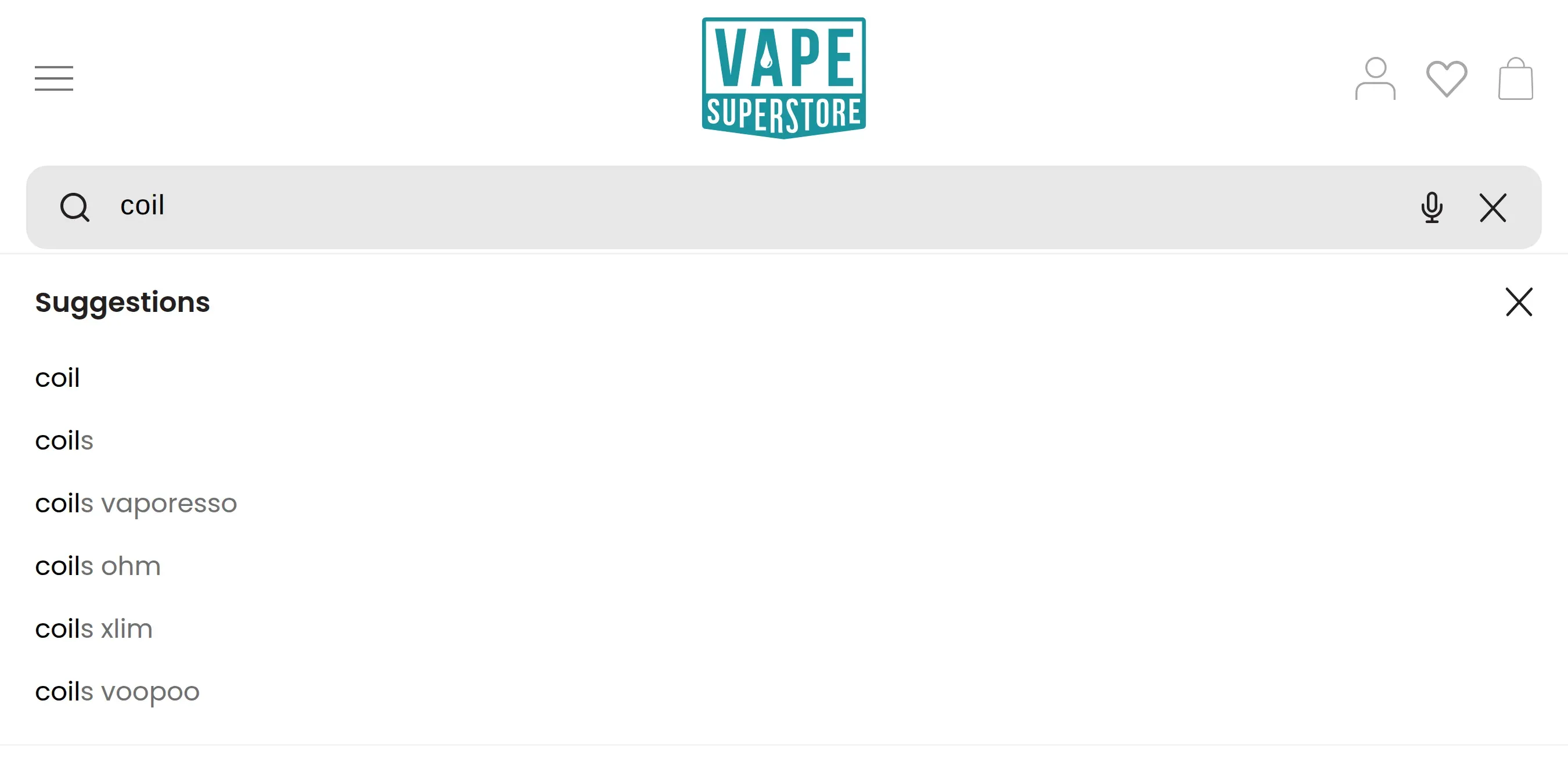
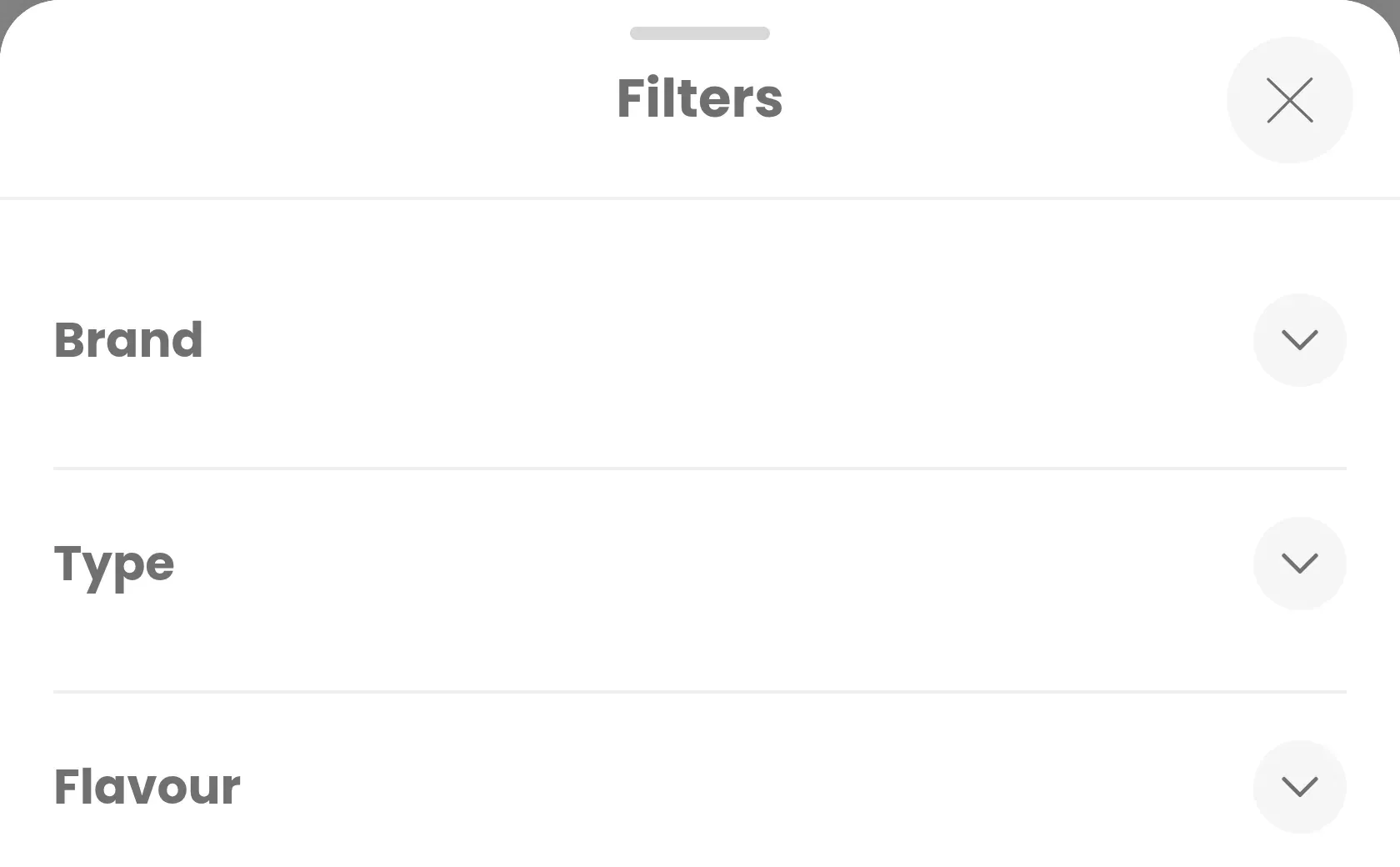
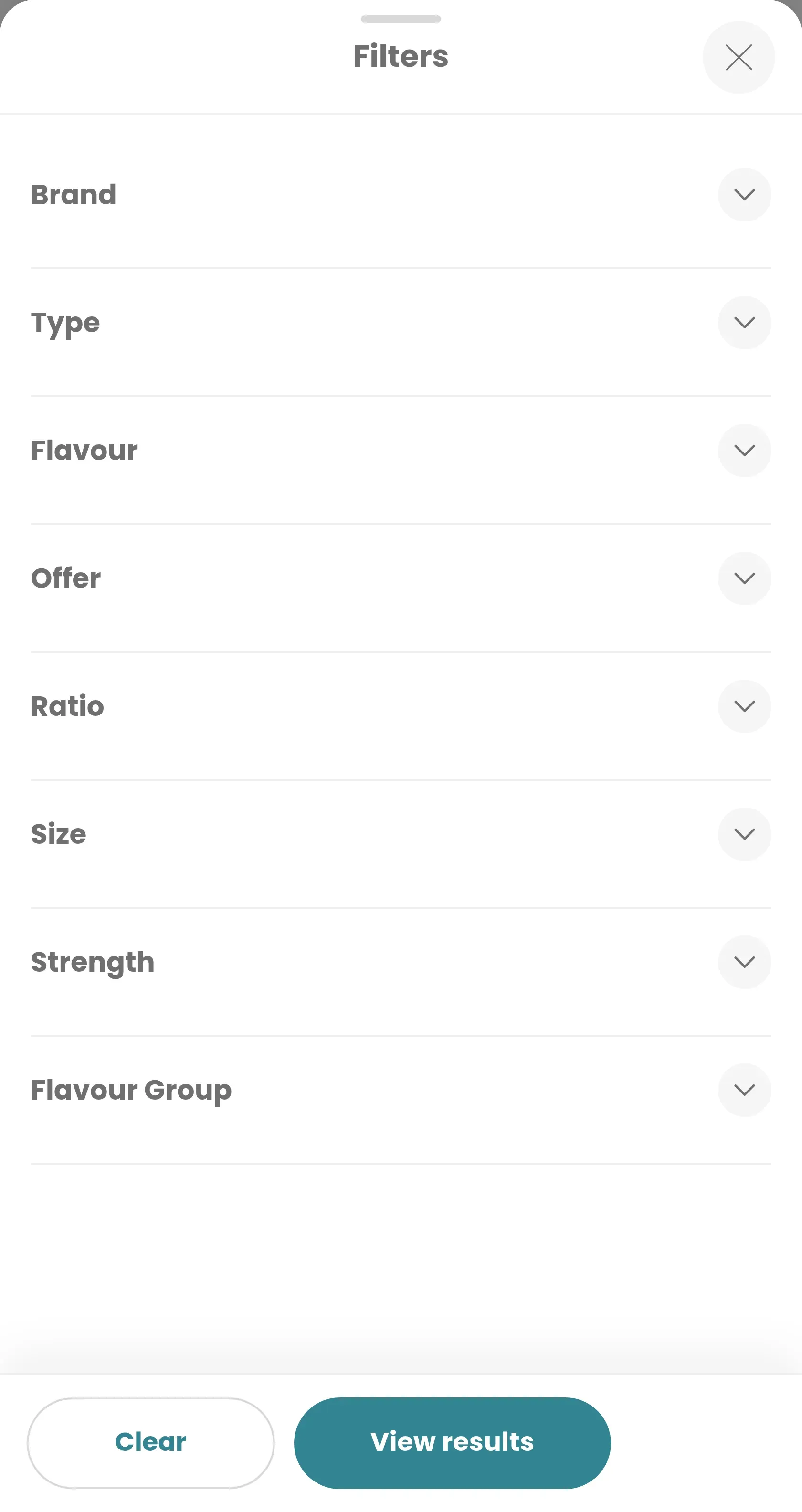
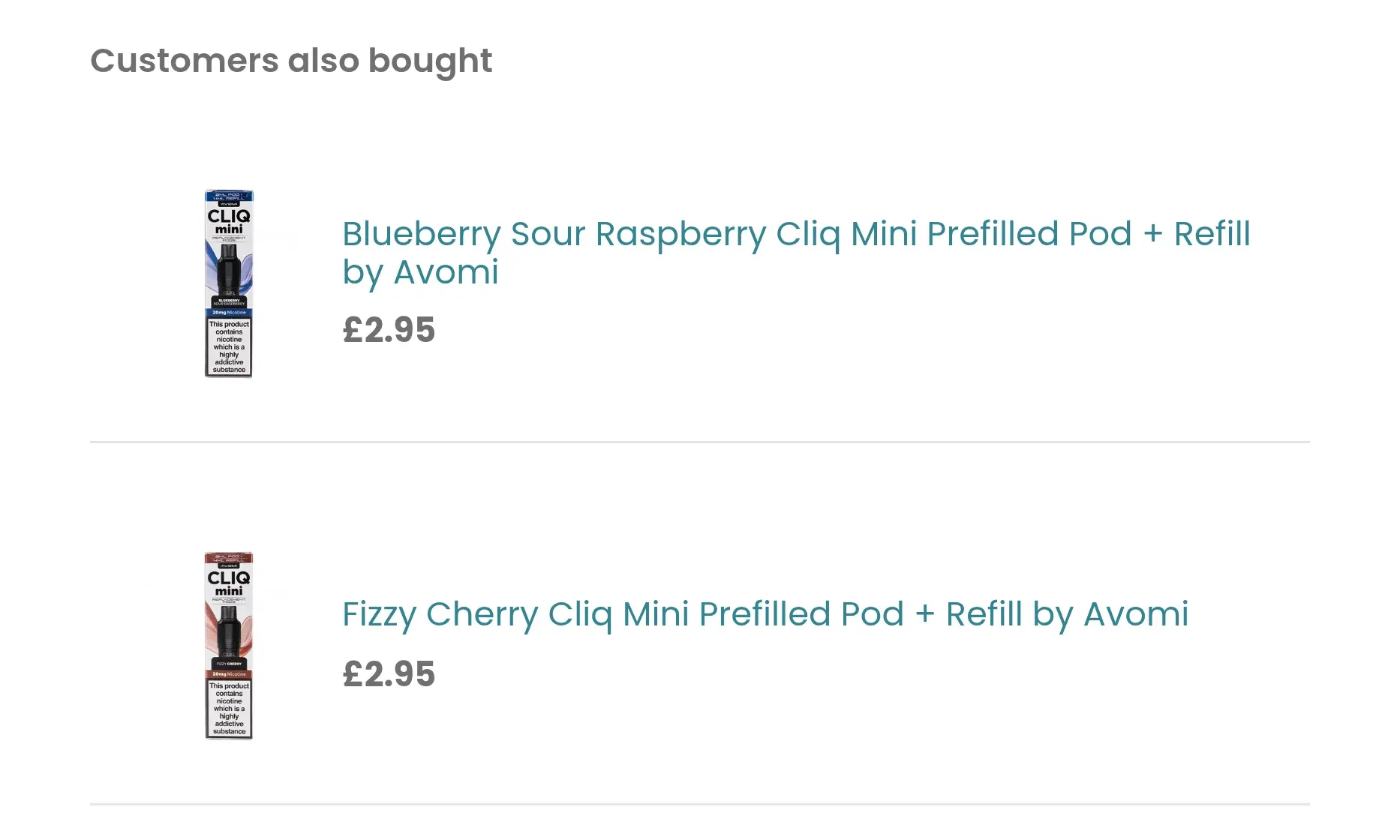
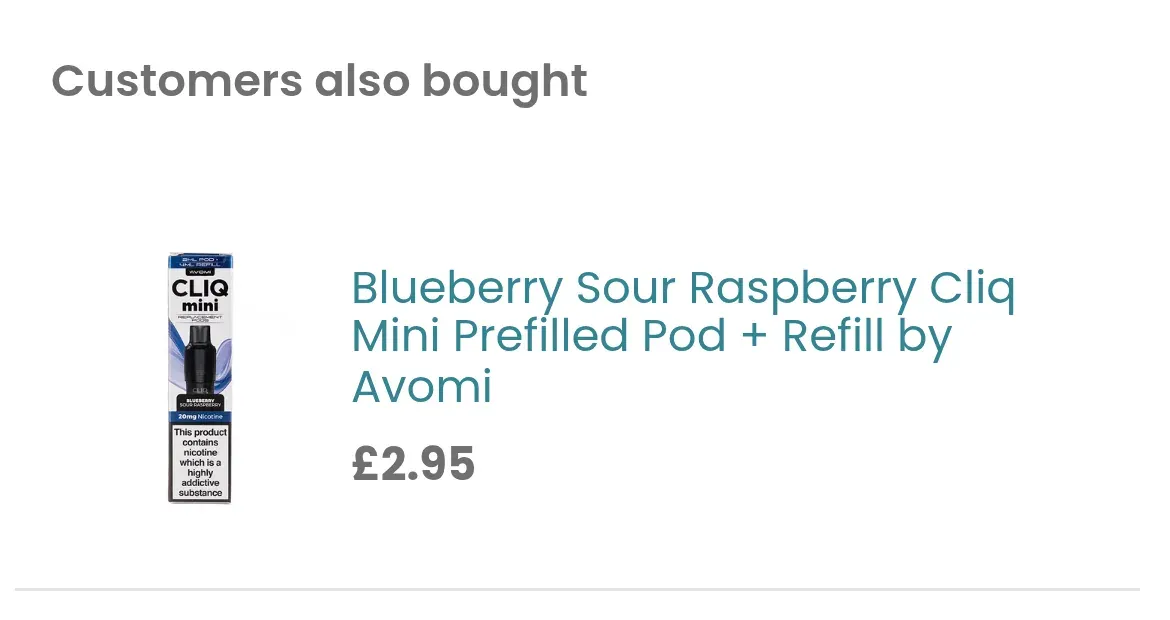
The header field asks for products, brands or a category. Typing opens suggestions, products and a short list of guides on the same page. The field is Algolia Autocomplete. On the e-liquids collection the filters are Algolia InstantSearch. Wide screens show Brand, Type, Flavour, Offer, Ratio, Size, Strength and Flavour Group above the grid, with a sort that includes Featured, Most relevant, Best selling, alphabetical order and price. Phones open the same groups in a filter sheet. The home page still has a block titled Explore Trending & Latest Vapes. The basket summary includes a list headed Customers also bought. The published Shopify theme still uses the schema name Karmoon.
The results
Algolia attributes that change to customers finding products more quickly, and to upsell from Recommend and Personalization. The comparison is with Boost Search & Filter. The story also lists a more relevant search, a more personalised experience, and an SEO gain from speed and the other performance measures it names.
Judd said Personalization had played a big role in moving customers through the catalogue. On the reporting, Swain said, "It allows us to make more informed decisions. That's something we've just started playing with, but we are already starting to see where we can tweak and adjust and amend things to improve our offering." Those words are the case study's, from the time it was written.
The September 2023 awards post says the store was shortlisted for UK Ecommerce Website of the Year, UK User Experience of the Year and Omnichannel Experience of the Year. Algolia's story records a 2022 shortlist for B2C eCommerce Website of the Year. Both are the store's nominations.
What other large-catalogue Shopify brands can take from it
Another large-catalogue Shopify brand can take the structure, and should leave the percentages where Algolia put them. They belong to this range, the previous platform, and a six-week window.
If paid ads are closed, discovery on the site has to earn the session. Swain's point about traffic from search is why speed and relevance belong in the build with the theme, in the same scope as the templates. The search index, the collection templates and the header field are one piece of work. That is the integration described on the Shopify development agency page, and it sits with the studio's other services.
Thousands of near-duplicate SKUs need more than a keyword match. Judd's e-liquid example is why Personalization and AI Reranking are in the story. Search had to be fast, and the order of the results had to change with the customer.
Boost Search & Filter and Nosto had split that job. One platform for Search, Recommend, Personalization and AI Reranking is what let the home page, trending items, category sort and filters, and the basket suggestions share rules. The case study links the movement in average order value to the upsell from Recommend and Personalization. A brand running the same split should check that the collection rules and the basket rules agree.
The two-week deployment is the line that gets repeated. The case study also records another three to four weeks of refinement, Personalization still being tuned with Algolia's customer success manager, and reporting already being used to decide what the range should stock.
If the catalogue is large and the current search or recommendation tools are the constraint, send the store URL through the contact form.

